

Choosing the Right Shape for Your Kitchen
When designing a new kitchen, it’s often the finer details that make the biggest difference. While colour, material and layout are key considerations, the edge profile of your worktop plays a crucial role in defining the overall look and feel of the space.
At Oxford Stone Craftsmanship, selecting your edge profile is an important step in our process. The right profile can subtly enhance a contemporary kitchen or add character and tradition to a more classic design. Below, we explain the most popular worktop edge profiles, how they’re used, and how to choose the right option for your home.
Square Edge – Timeless and Versatile
A square edge, finished with either a double chamfer or double pencil round, is one of the most popular and enduring choices for stone worktops. This profile is considered a classic because of its clean lines and understated finish.
It works beautifully in both contemporary and traditional kitchens, making it a safe yet stylish option if you’re looking for longevity in your design. The subtle detailing softens the edge without distracting from the stone itself.
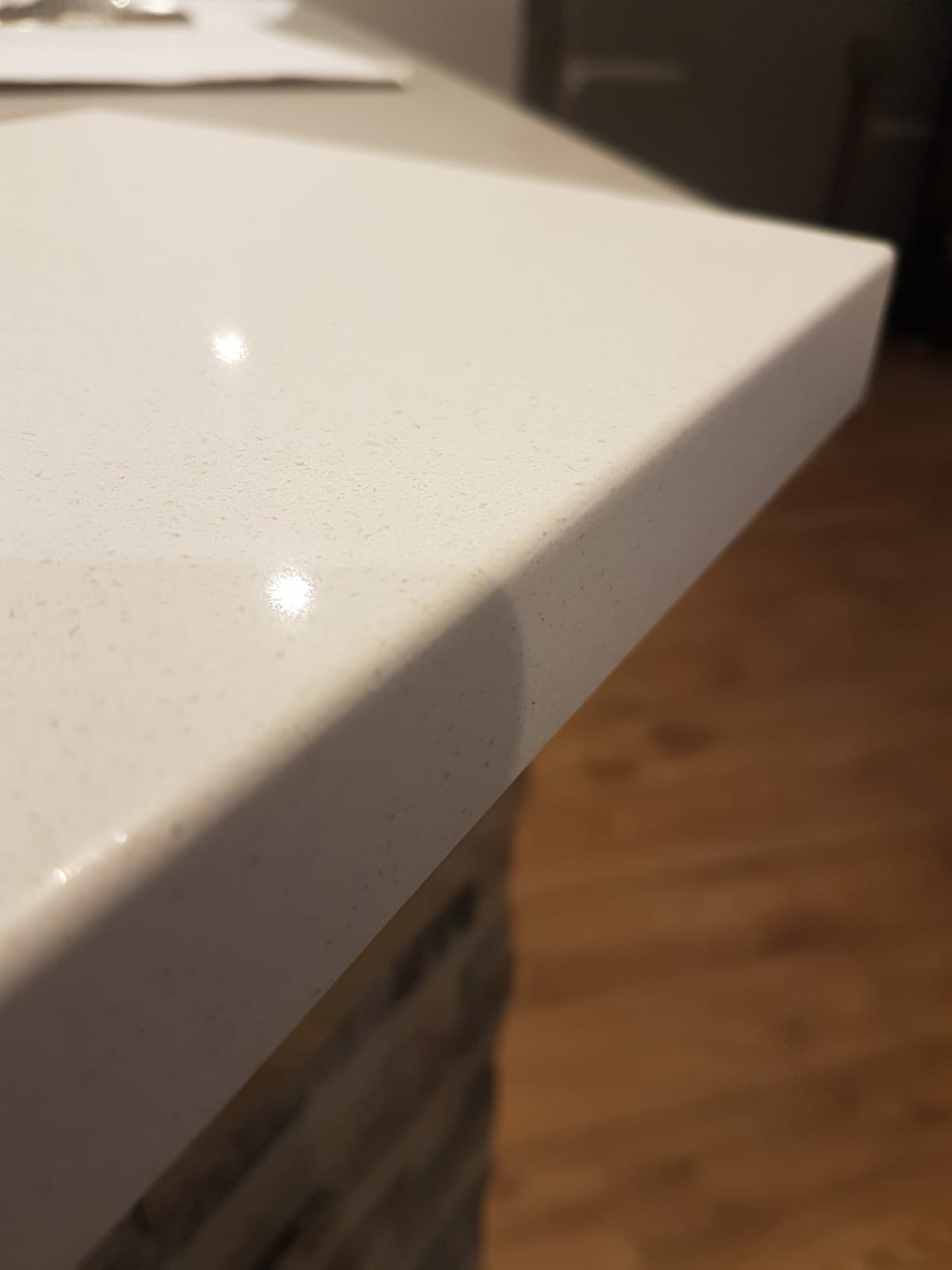
Double Pencil Round Profile Edge
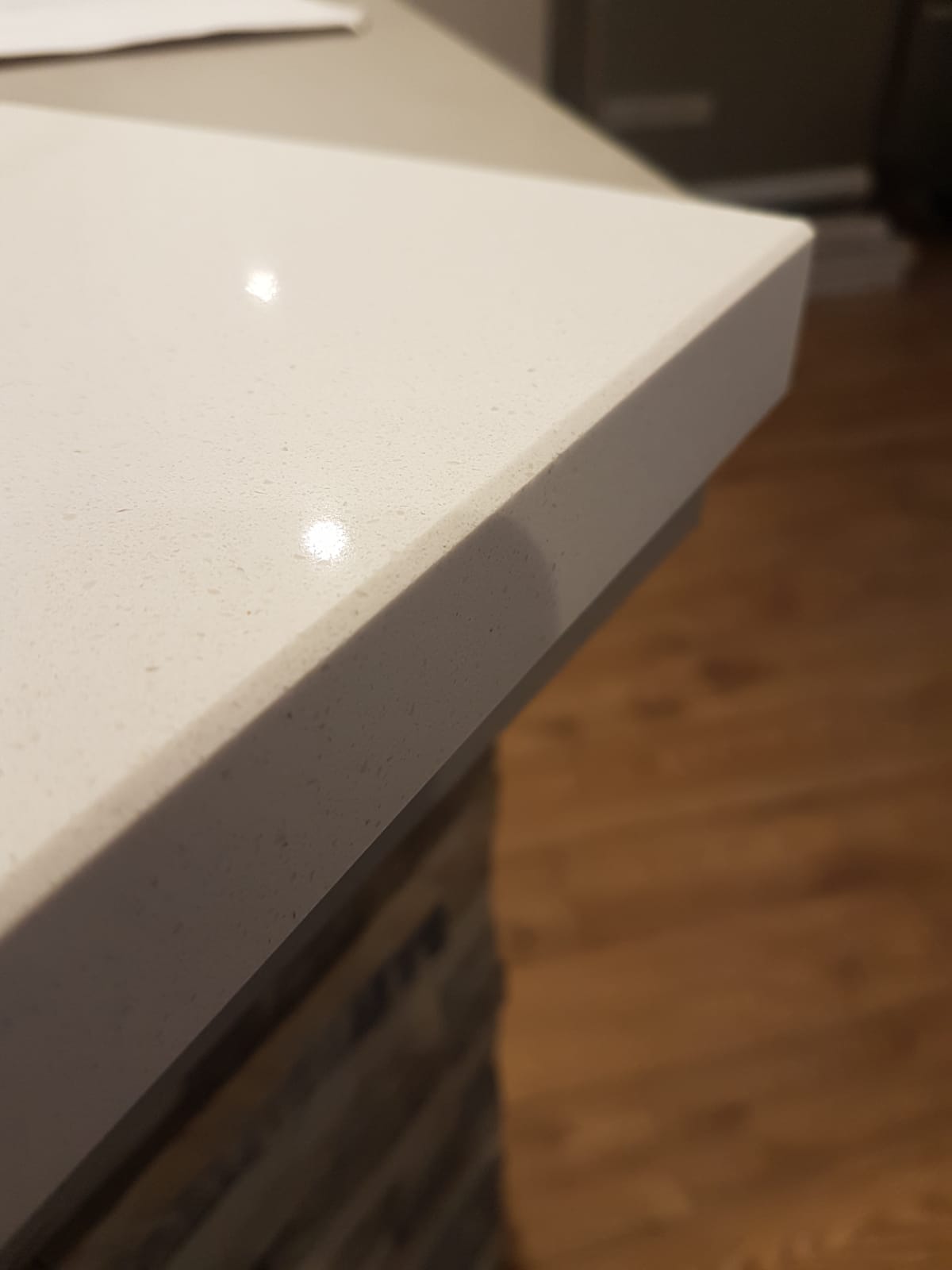
Double Chamfer Profile Edge
Ogee and Dupont – Traditional Elegance
Ogee and Dupont profiles are more decorative and are often associated with traditional or period-style kitchens. These profiles feature elegant curves that add depth and craftsmanship to the worktop edge.
A popular design choice is to use an ogee or Dupont profile on a kitchen island, while keeping surrounding worktops finished with a simpler double chamfer or pencil round. This creates a beautiful focal point without overwhelming the space.
These profiles work particularly well in classic kitchens with timber cabinetry, painted finishes and more traditional detailing.
Shark Nose – Sleek and Contemporary
For modern kitchens, the shark nose profile offers a sharp, architectural look. This profile creates a subtle recess underneath the edge, giving the impression of a thinner, floating surface.
It pairs especially well with handleless and J-handle kitchens, where clean lines and minimal detailing are key. The shark nose edge complements contemporary materials and layouts, delivering a refined and modern finish.
Bull Nose Profiles – Soft and Traditional
Full bull nose and half bull nose edges offer a softer, rounded appearance and are commonly found in more traditional settings. These profiles are particularly popular for window sills, where the rounded edge provides both comfort and visual balance.
They can also work well in family homes, where softer edges are sometimes preferred for practical reasons.

Window Sill With Horns and Full Bull Nose Edging
Double Ogee – Decorative and Statement-Led
The double ogee profile is more ornate and makes a strong visual statement. This edge is often chosen for feature areas rather than full kitchen runs.
It works well when used as a planted detail, adding interest and craftsmanship to a specific section of the kitchen. Due to its decorative nature, it’s best suited to traditional interiors where detail and character are celebrated.

Double Ogee Profile Edging
Planted Worktops – Creating the Look of Thickness
Planted worktops are designed to give the appearance of a thicker stone surface by bonding sections together. Common combinations include 20mm plus 20mm, 30mm plus 30mm, or 20mm plus 30mm.
This technique allows flexibility in design, as different edge profiles can be combined to suit the space. Planted worktops are popular in both traditional and contemporary kitchens and are often used on islands or statement runs.

Image of Planted Worktop, Barrington-style Edging
Mitred Build-Up – Clean and Contemporary
A mitred build-up creates the illusion of a thicker surface while maintaining a sleek, modern aesthetic. The stone is carefully mitred so the veining or pattern flows seamlessly around the edge.
This approach is particularly popular in contemporary kitchens and works beautifully on islands, breakfast bars and waterfall ends.

Mitred Downstand Edging
Bespoke Edge Profiles – Designed Just for You
For clients looking for something truly unique, we can also create bespoke edge profiles. Customers can sketch their desired edge shape, which is then sent to our tooling specialist in Italy. A custom tool is produced and returned for approval before fabrication begins.
As this process involves specialist tooling, bespoke edges require a longer lead time, but they offer complete creative freedom and a truly individual finish.
Choosing the Right Profile for Your Kitchen
Ultimately, the best edge profile depends on your kitchen style, how the space will be used, and where the worktop sits within the design. Mixing profiles is also a popular option, allowing statement areas to stand out while keeping the overall look balanced.
As part of our process, the Oxford Stone Craftsmanship team will guide you through the available options and help you choose a profile that complements your stone, cabinetry and lifestyle.
Part of Our Process
Selecting your edge profile is a key step in our proven process. To see how this fits into the wider journey – from choosing your stone to installation and aftercare – visit our Process page or speak with our team in the showroom.
With expert advice and precision craftsmanship, the right edge profile will elevate your worktop and bring your kitchen design together beautifully.
Get in Touch
Visit our Oxford showroom to explore your options or speak to our friendly team for tailored advice.
Call us: +44 (0) 1865 777303